To Reminisce

You can’t go home again

Thomas Wolfe

Is it better to go to the same place over and over again to see it in a different light and discover the little nuances, or is it better to check the “been there done that” box and move on? This is a question I’ve often asked myself, and so far I haven’t discerned a clear answer. I tend to favor the former perhaps because I’m a sucker for familiarity and nostalgia. And frankly, it’s easier, which appeals to my lazy self. Still, a novel destination makes for a better adventure. We have recently completed what may be our last cruise in the Virgin Islands for a long time, and we ultimately split the difference. Old friends were seen and appreciated, but we also discovered some new favorites.

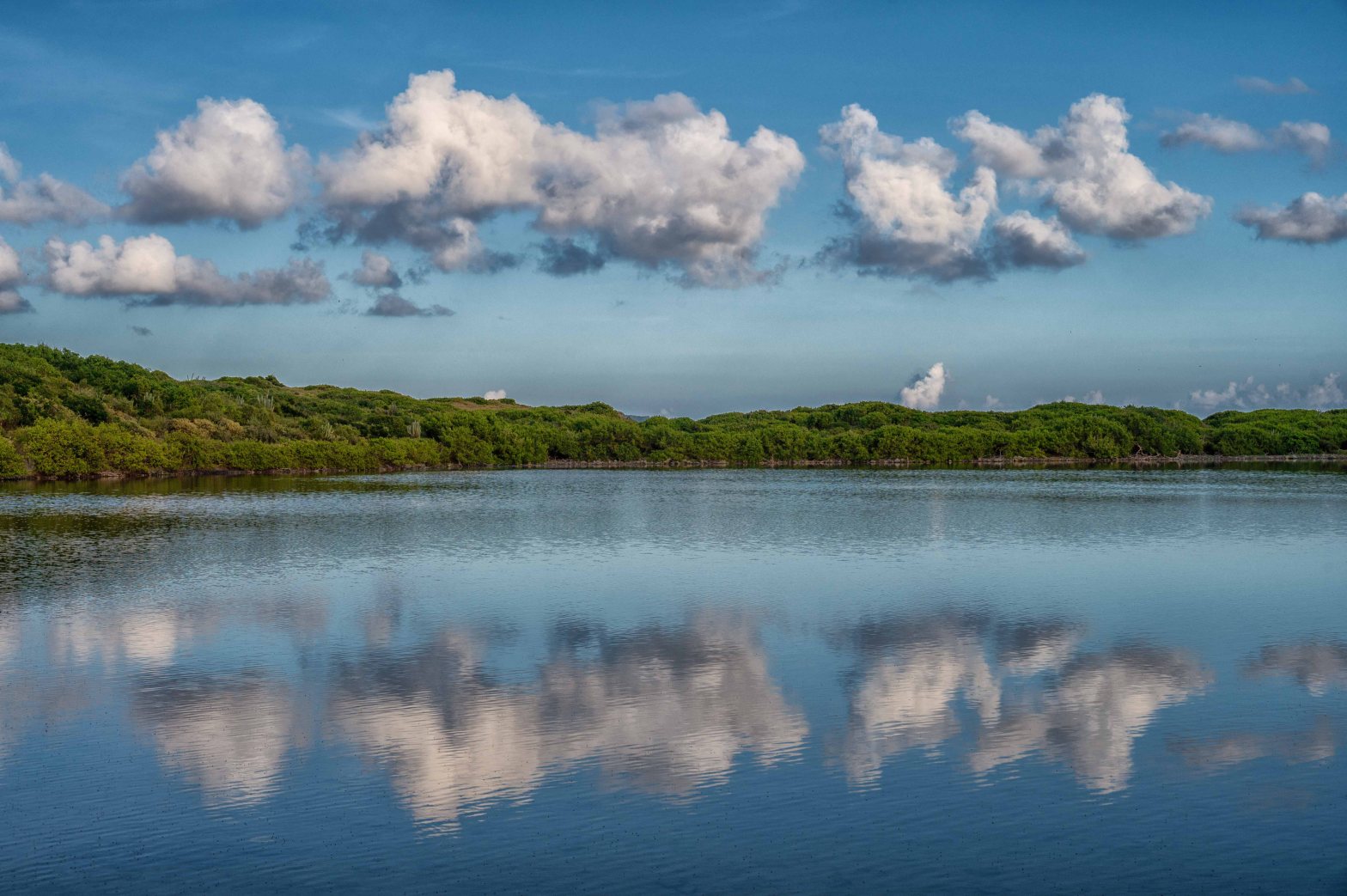
Today’s post is a revisit to Salt Pond Bay and Salt Pond itself. This is a favorite at the southeast corner of St John. It’s also a favorite of the locals, perhaps because only the more adventurous tourists find this place. It’s not uncommon to come across a solo local musician here whose only intent is to fill the tropic breeze with soothing sounds. Self-healing, perhaps. I’ve visited this place many times, and it is different every time. Sometimes it is a little stormy and overcast, a condition that is not kind to the pond’s appearance. At other times, it is calm, with brilliant sunshine and fluffy clouds. The reflections off the mirror surface are nature showing off her beauty. I’m happy that the pond was showing off on this day.
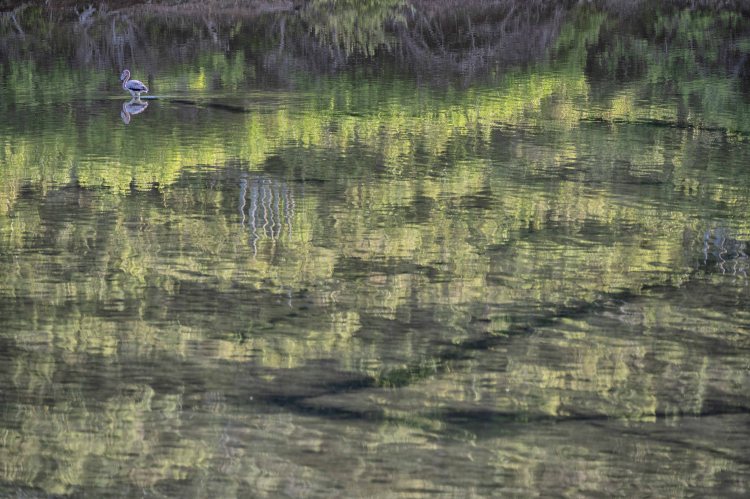
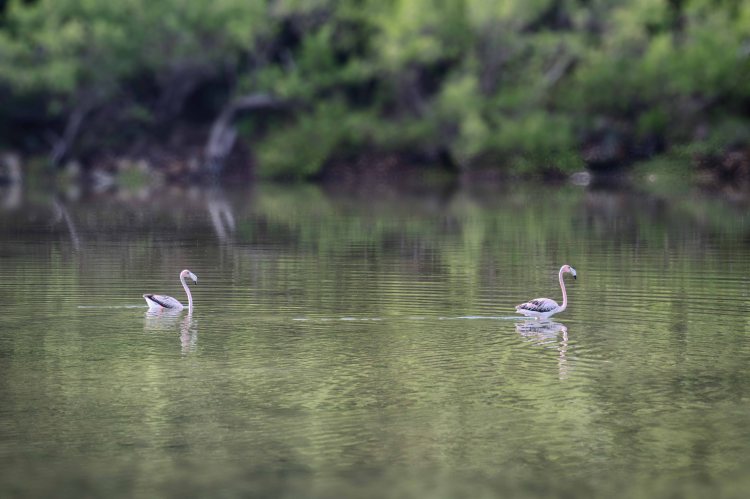
To top off the experience, flamingos were visiting too. Perhaps it should not be a surprise that these elegant birds are attracted to this shallow, protected basin. But a surprise it was, primarily because of their previous absence. Had they been there every visit, we might be complacent about their presence. I don’t know when I’ll be back to Salt Pond again but I do know it won’t be the same.
Still Not A Fisherman

 “Many men go fishing all of their lives without knowing that it is not fish they are after.”

Henry David Threau

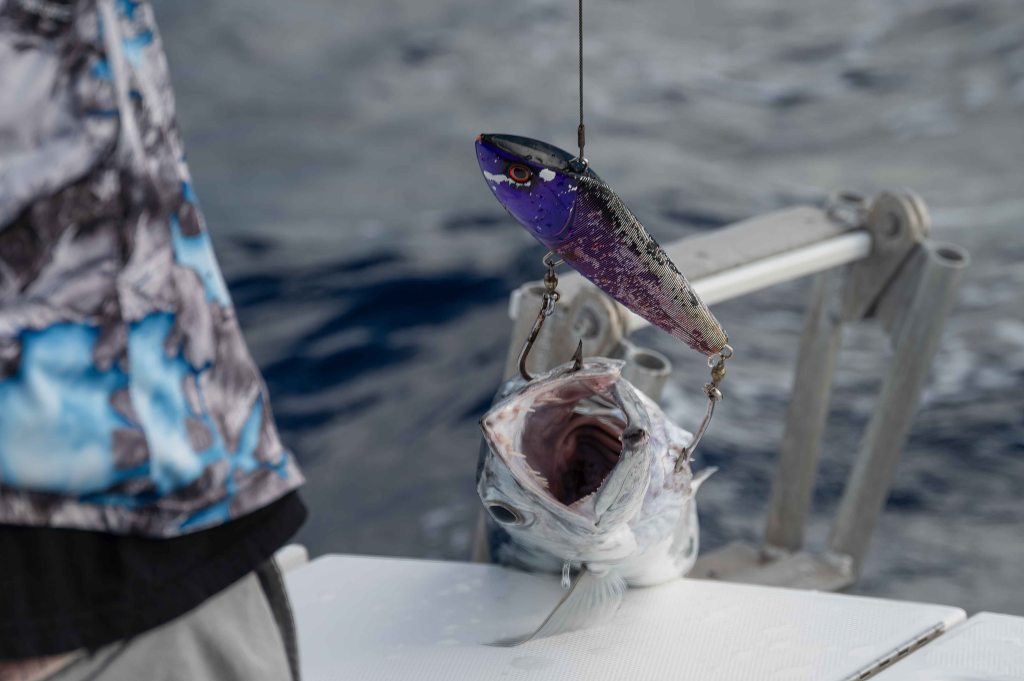
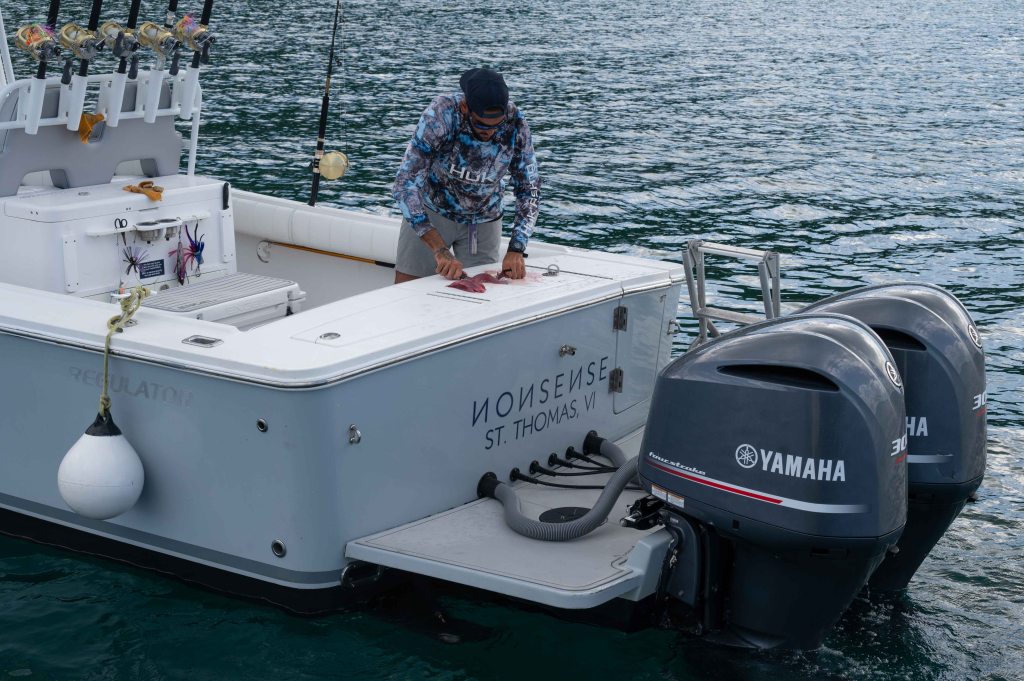
I’m not a fisherman, but I still like to fish sometimes. SeaSea has a couple of rod holders, and charterers have successfully pulled their catch onto her decks, but we opted to hire someone who knew what he was doing and knew where to go. Lawrence of Drift Charters met us early one morning in Caneel Bay. Typically, the morning rendezvouses are at Compass Point Marina, St Thomas, or the National Park dock in Cruz Bay, St John. With advanced notice, however, there was no problem arranging an alternative meeting place. There are quite a few options when booking a fishing trip. We opted for a six-hour offshore outing. Captain Lawrence took us on Nonsense, a 34-foot Regulator center console, to the South Drop, somewhat obviously south of St John, where a giant ledge drops from a few hundred feet deep to thousands.

We sailed in the same area on our way to St John a day earlier. The ledge was so dramatic that I thought something was wrong with our fathometer until I looked at the chart plotter and ascertained that the depth finder on SeaSea is only good to 600 feet. The big fish must like this subaquatic feature as it is a favorite feeding ground when the tide and current are right.

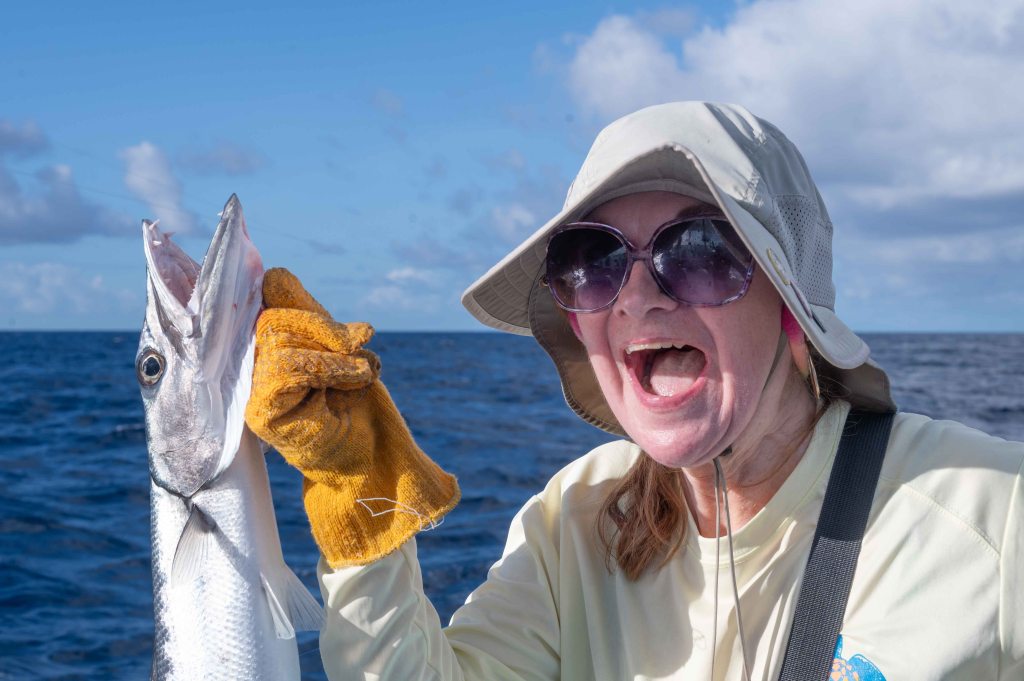
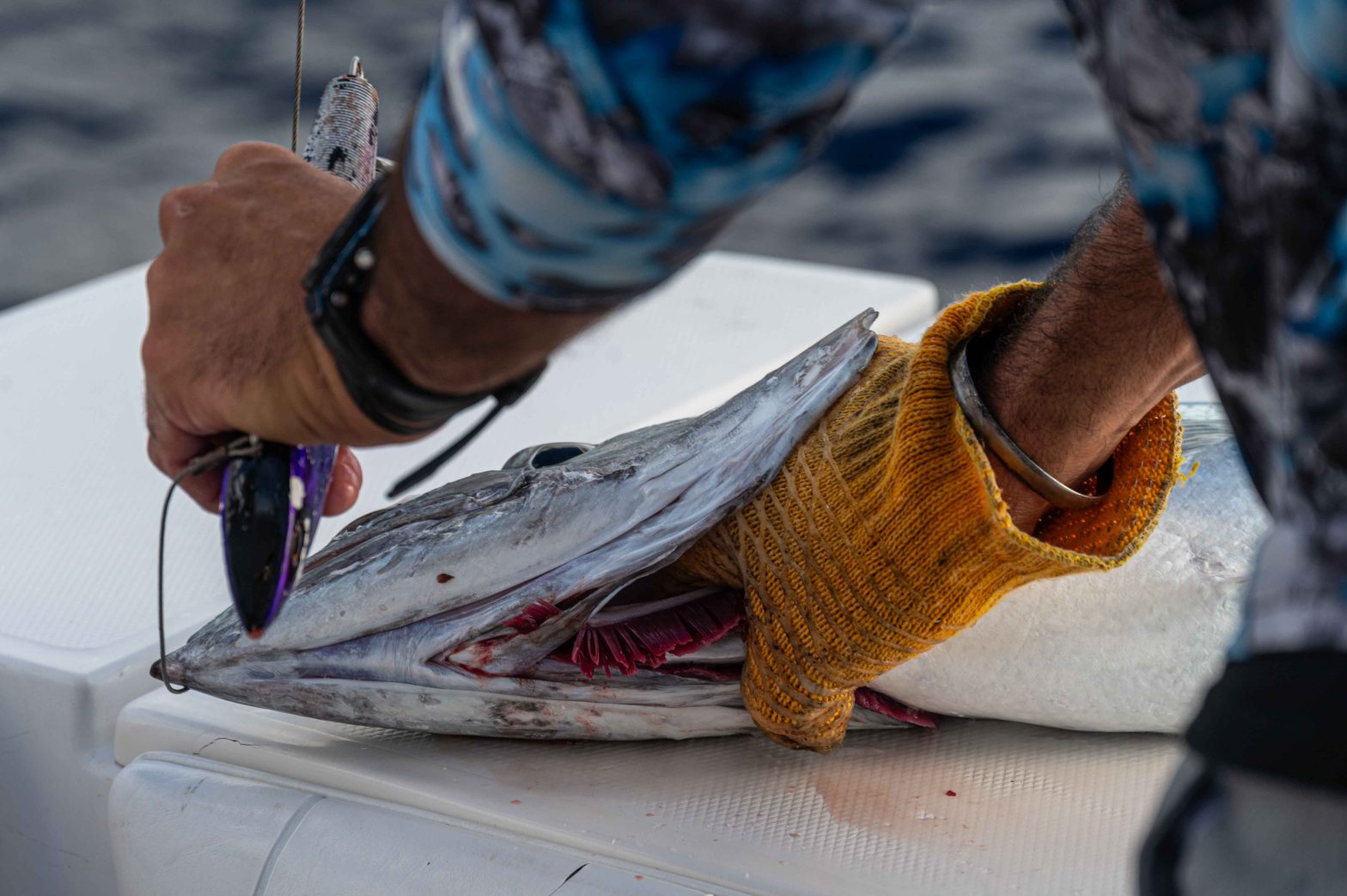
Our day at the drop was filled with excitement as the barracuda were particularly hungry. They were the only species feeding that morning, with the exception of a bonito. However, as many philosophers point out, the true objective of the recreational fisherman isn’t always about the catch, whether they know it or not. We had a fantastic time. Lawrence’s knowledge and professionalism added to the enjoyment making the experience even more memorable.
As SeaSea’s owners we really, really appreciated the care Lawrence exhibited when rafting up against our boat to take us aboard. At the end of it all he even cleaned our fish.

I highly recommend Drift Charters. https://driftcharters.com

The Caves of Treasure ( Norman) Island

“In the immediate nearness of the gold, all else had been forgotten.”
― Robert Louis Stevenson, Treasure Island

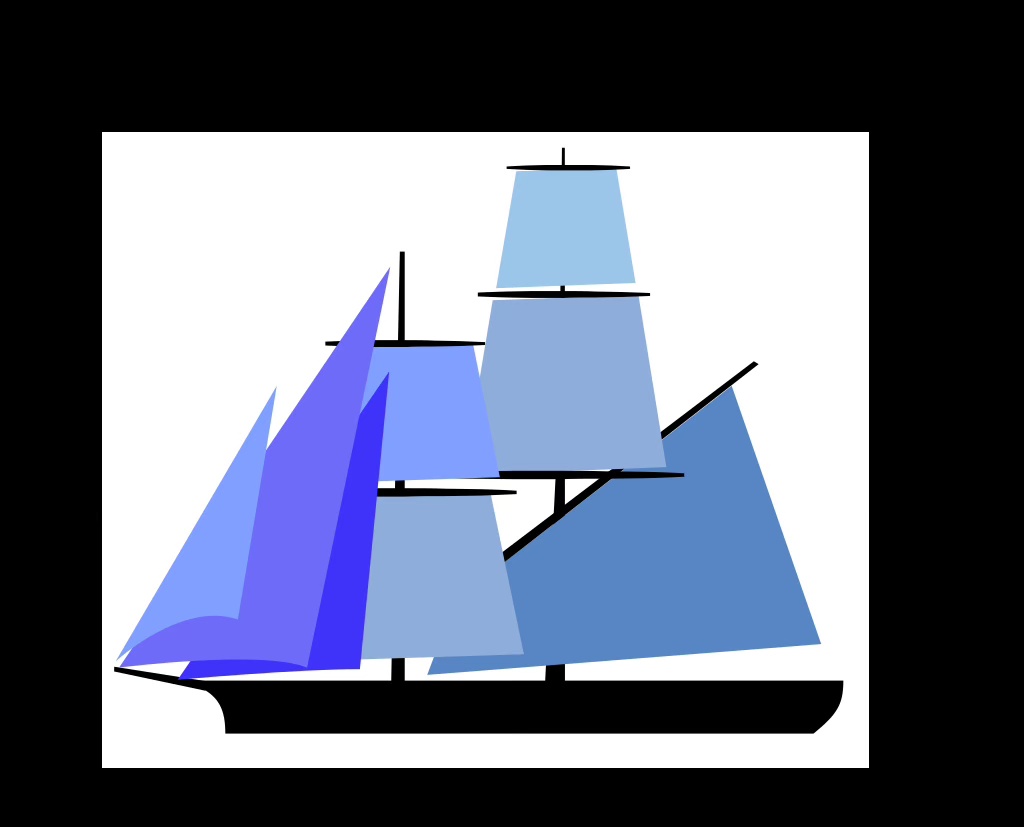
Aye Matey, there’s a treasure in these here caves. It was stashed here by Mr. Owen Lloyd and his crew after they committed mutiny on the Spanish Galleon Nuestra Señora de Guadalupe while it was sheltering from a storm off the coast of North Carolina. The pirates, with their hearts pounding and the wind in their sails, made a daring escape from the Carolina coast to St Croix on a bilander, a two-masted vessel sporting a square and lateen rig.

The caves on the North coast of an island, named for Captain Norman, would ultimately be the perfect place to conceal the loot, or so Robert Louis Stevenson’s naval uncle told the young writer.

As recently as 1910, somebody found a chest of silver coins on Norman Island. Then, according to local legend, a member of the Chalwell family sheltered his small fishing boat in one of the caves during a storm in 1915. The same wave action that formed the caves over thousands of years bashed his boat against the stone walls, filling it with rocks and, as his luck would have it, a small chest filled with gold doubloons. There remains to be official documentation of this windfall, so there is some speculation here. Still, the family gave up fishing shortly after the storm, opened a shop in Charlotte Amalie, and gave their new daughter-in-law a necklace made of doubloons long enough to reach her feet.

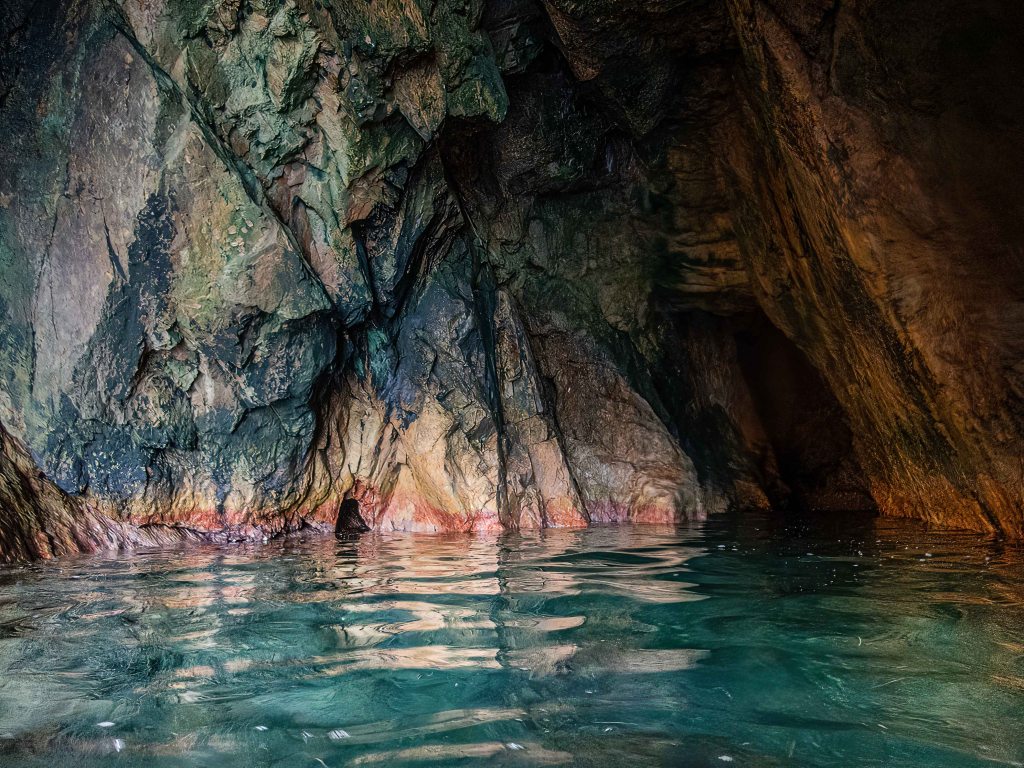
Today, there is still treasure on Norman Island of the natural beauty kind. Aptly named, The Caves, at Privateer Bay are draped in color as they extend up to 70 feet into the darkness of the sandstone wall.

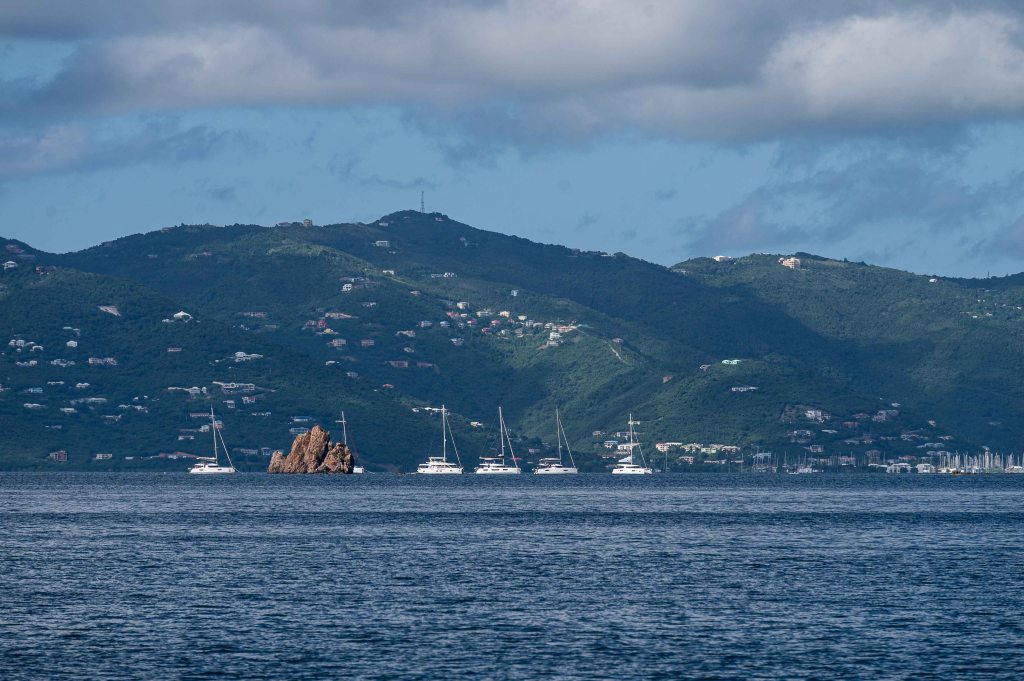
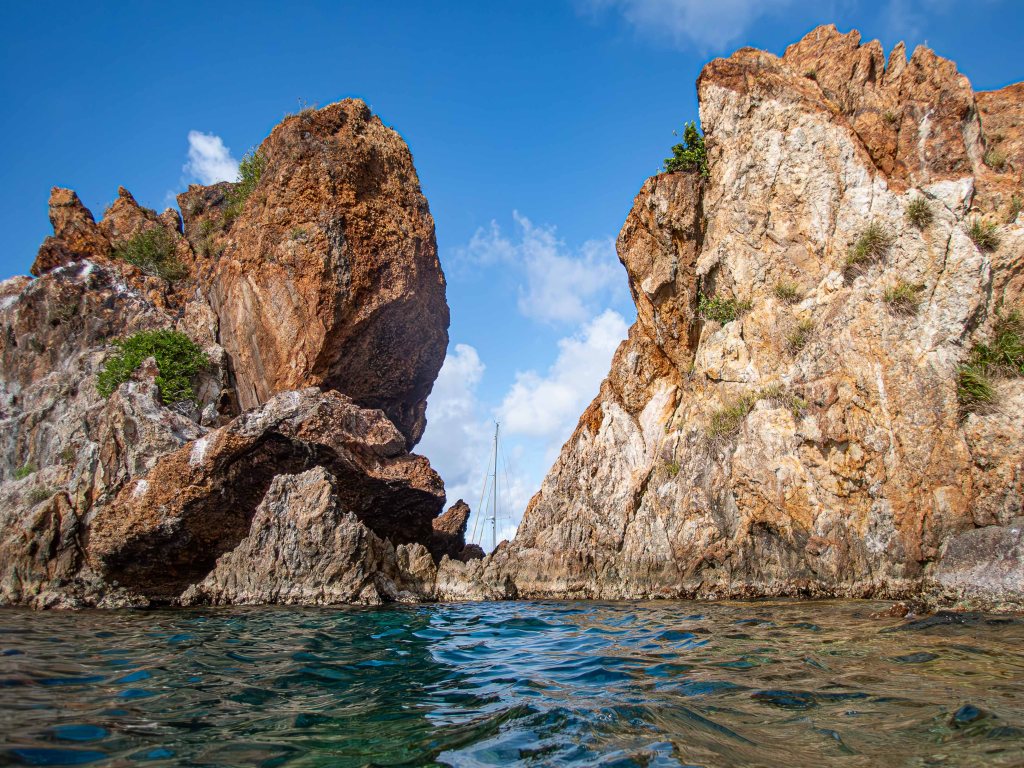
The Indians and their catamaran-riding warriors are visible in the distance, and Nanny Cay on Tortola provides the backdrop.

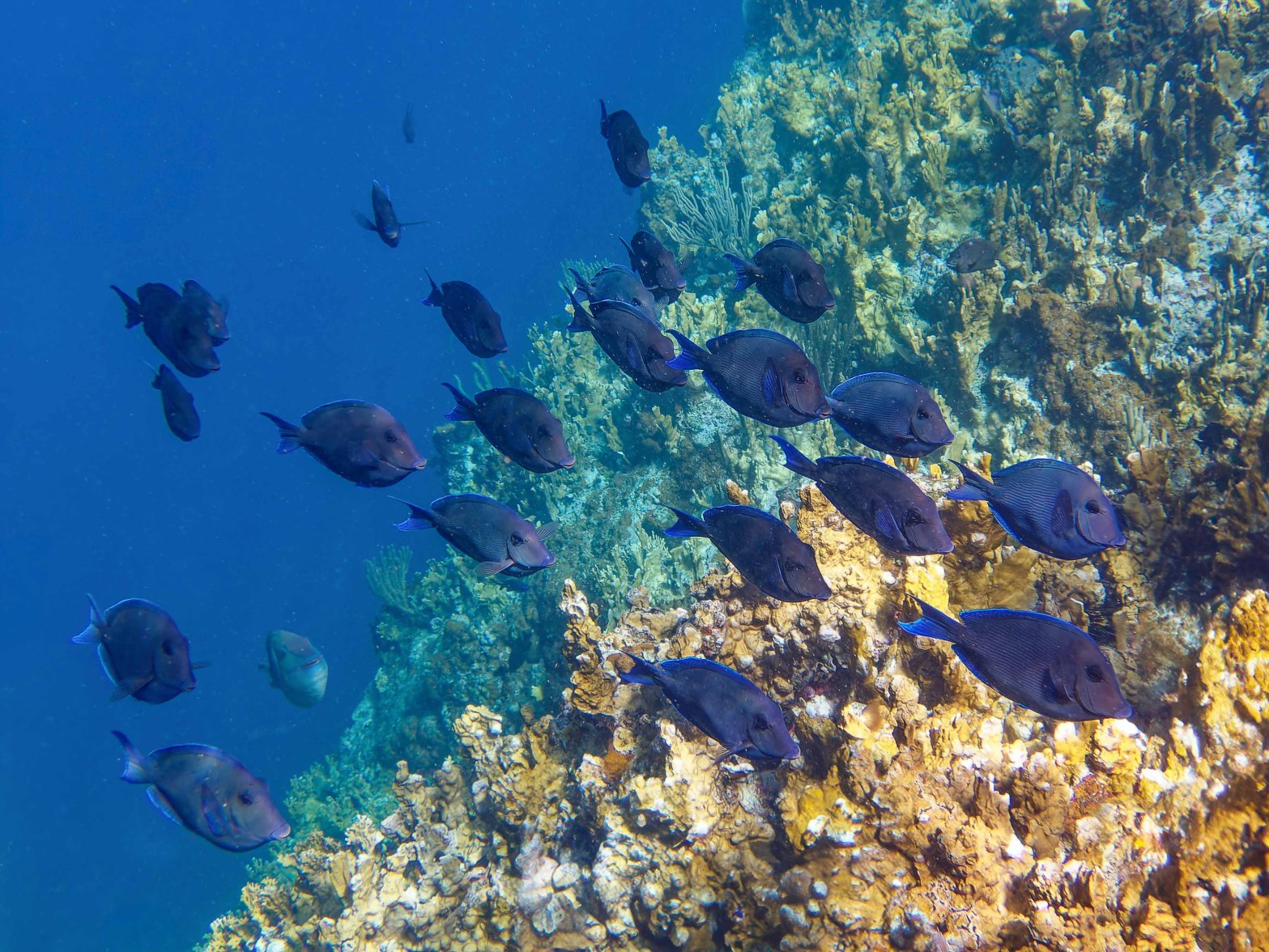
Under the waves, blue tangs serve as tour guides.

Around the corner of Treasure Point is the harbor known as the Bight, which is home to The Willie T, The Pirates Bight Restaurant, and 100 first come, first serve mooring buoys.

The natural treasures are easy to find in abundance. Pirate Treasure is a little more challenging. The rumors are that Owen Lloyd hid 55 bags of silver on the island; Tortolians found much of it, but I know I’ll look for the glint of silver and gold on my next trip when I hike to Spyglass Hill. I wonder what else his naval uncle told young Bob.

Different caves in a different country, Spain, but what the heck.

Buccaneer’s Paradise

”You see, crazy people don’t know they’re crazy. But I know I’m crazy therefore I’m not crazy, isn’t that crazy? “

Captain jack sparrow

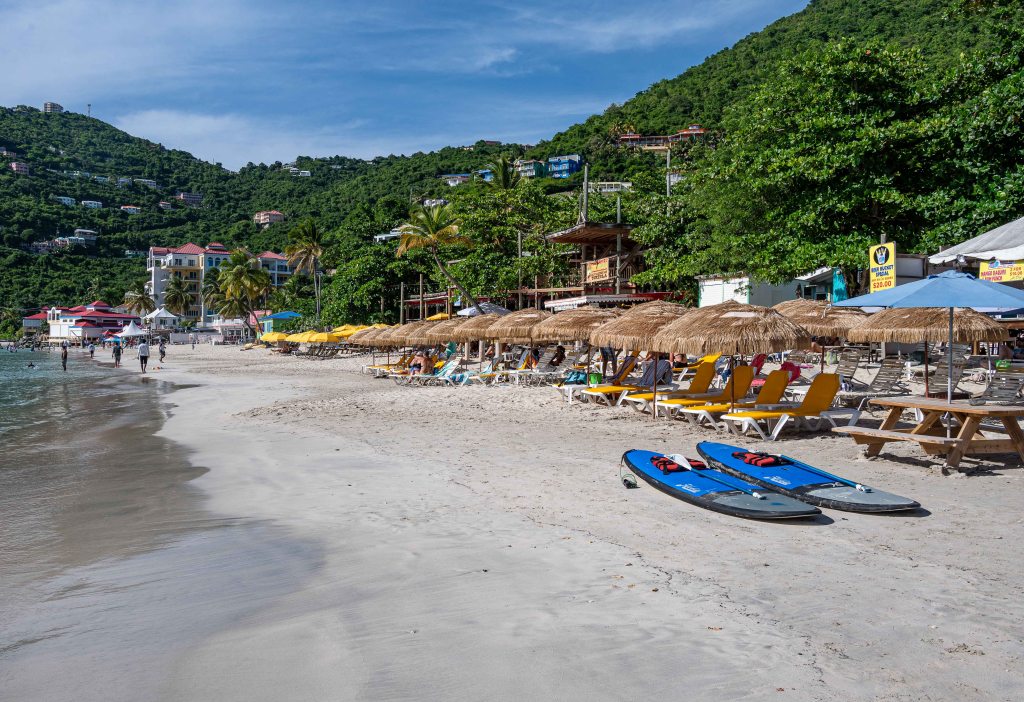
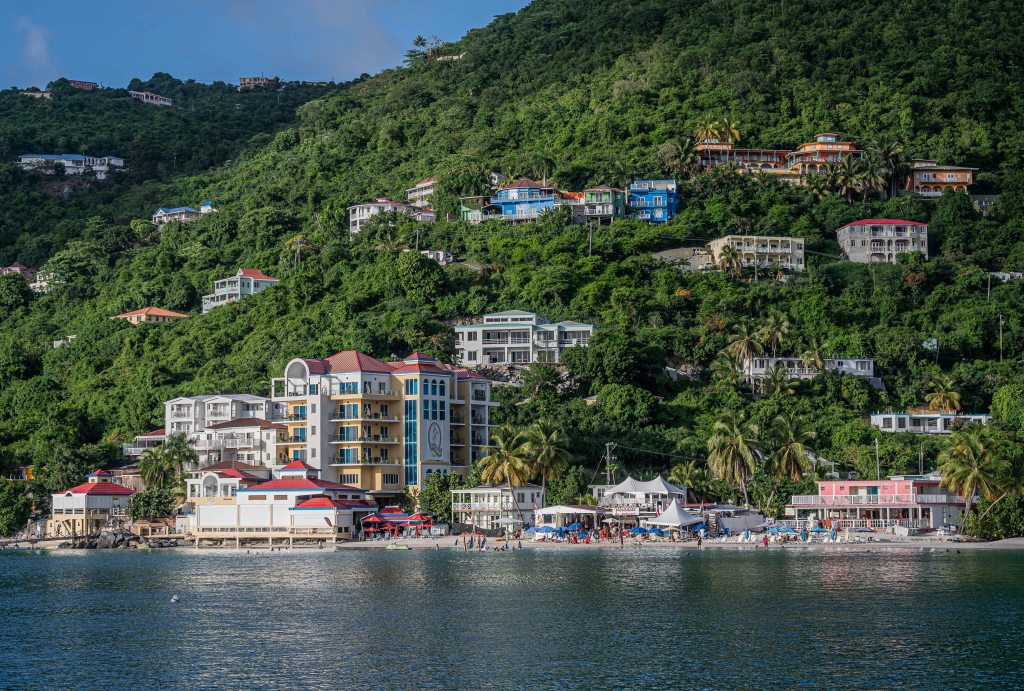
This is SeaSea, taking a moment to relax at the picturesque Cane Garden Bay, Tortola, following a leisurely sail from Anagada. The beauty of this bay is truly captivating.
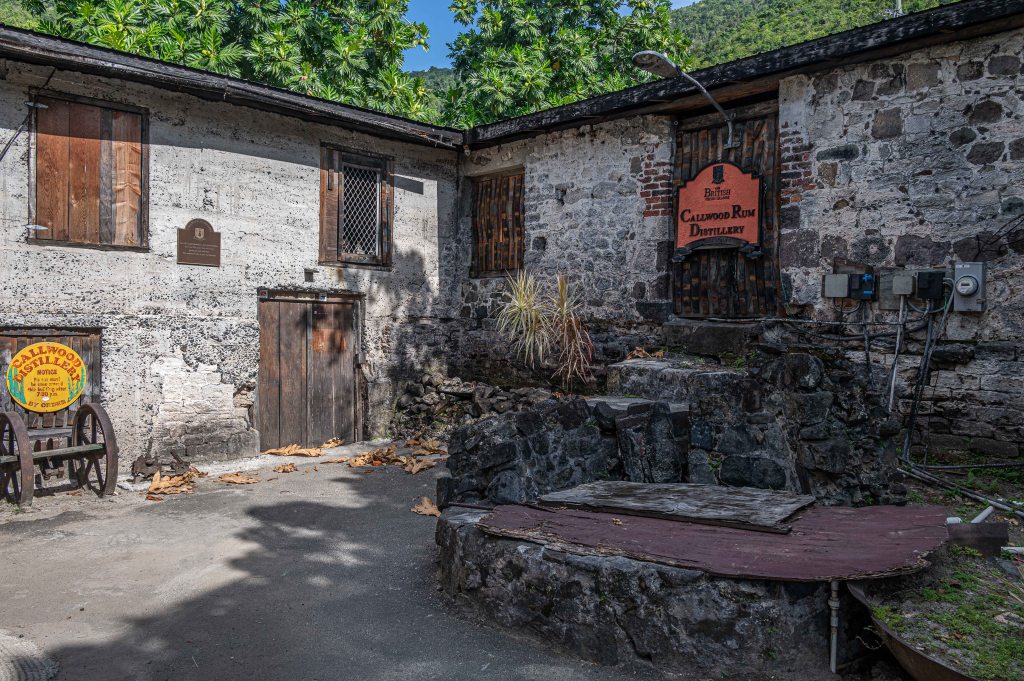
While researching Cane Garden Bay, I learned that a parcel of land was purchased here by buccaneer Richard Callwood in the late 1800s for his son Richaard Jr. On the land was a distillery, a significant establishment in the history of the bay. More on that later. But first, what exactly is a buccaneer? A pirate sorta kind of, maybe? I’ve used the term without, I admit, knowing its precise definition. Webster’s Dictionary says the name was first applied to French game hunters of Western Hispaniola who would occasionally engage in minor nautical misbehavior. The appellation derives from the French Boucan, a grill/ frame used to dry and smoke meat over fire by the original Buccaneers.

The lifestyle attracted a mix of unsavory scoundrels from around the world. In 1630, they migrated to Tortola. Spain controlled Hispanola and Tortola at the time and would have preferred the riff-raff to migrate from Spanish lands altogether. Spain tried exterminating the game animals from the islands to starve off the Buccaneers. The plan was not particularly successful from the Spanish point of view because it annoyed the buccaneers, who, now without a reliable food source, became increasingly dependent on the looting of Spanish ships. These days, the term buccaneer applies to pirates of the Caribbean and Pacific Central American coasts who targeted Spanish vessels in the seventeen and eighteen hundreds.

At about the same time, Rum production was in its heyday. There were 106 distilleries in the BVI, 26 in Tortola. Of them, only the Callwood Rum Distillery still produces rum today. This distillery, established on the land purchased by Richard Callwood, is a testament to the region’s rich history of rum production. It’s open for tours and presumably rum sales on Monday through Saturday. Sundays, too, when a cruise ship is in port. We must have been there on a Sunday as it was closed. Generally, we avoid cruise ship days at any location considered a tourist destination. Those are the days to be sailing, grilling meat on a modern day version of the Boucan, and eating on board. So be a Buccaneer prepare some meat over a fire, but go easy on the nautical mischief please.

Pirate music of course :

Look hard enough and you never know what you will find. Before today, I’ve never heard the word boucan.

Deep Cuts

Look deep into nature, and then you will understand everything better.

Albert Einstein

In the music industry, famous artists have hits that are well-known by most. But often, true gems go unnoticed by anyone but the true aficionados. These deep cuts can be fantastic, even if not of great commercial success. Whistling Cay, the location of an abandoned customs house, lies just west of Mary Point and, by my estimation, is one of these deep cuts. It is certainly not unknown; there are mooring buoys there, but it requires a boat to get there. So, it goes unvisited by many tourists, which can be a shame or a blessing, depending on one’s perspective.

The snorkeling is some of St John’s best; toward the west side, there is abundant sea life, rock formations, caves, and corals. The Island is more exposed to open water than other popular St John snorkeling sites, so it may be more subject to currents. We experienced excellent water clarity early in the morning, but it clouded up a bit as the morning grew older. Our recommended strategy is to spend the night in Francis Bay and then motor the five minutes to Whistling Cay. Do a morning snorkel before heading to West End Tortola to sign into the BVIs. That way, the early morning boat lines at British Customs are avoided.

Not sure that this is a deep cut but I like it anyway.

The Indians: A Spectacular Dive and Snorkel Location in BVI

There is a mistaken belief that the word Indian refers somehow to the country, India. When Columbus washed up on the beach in the Caribbean, he was not looking for a country called India. Europeans were calling that country Hindustan in 1492…. Columbus called the tribal people he met “Indio,” from the Italian in dio, meaning “in God.”

Russel Means

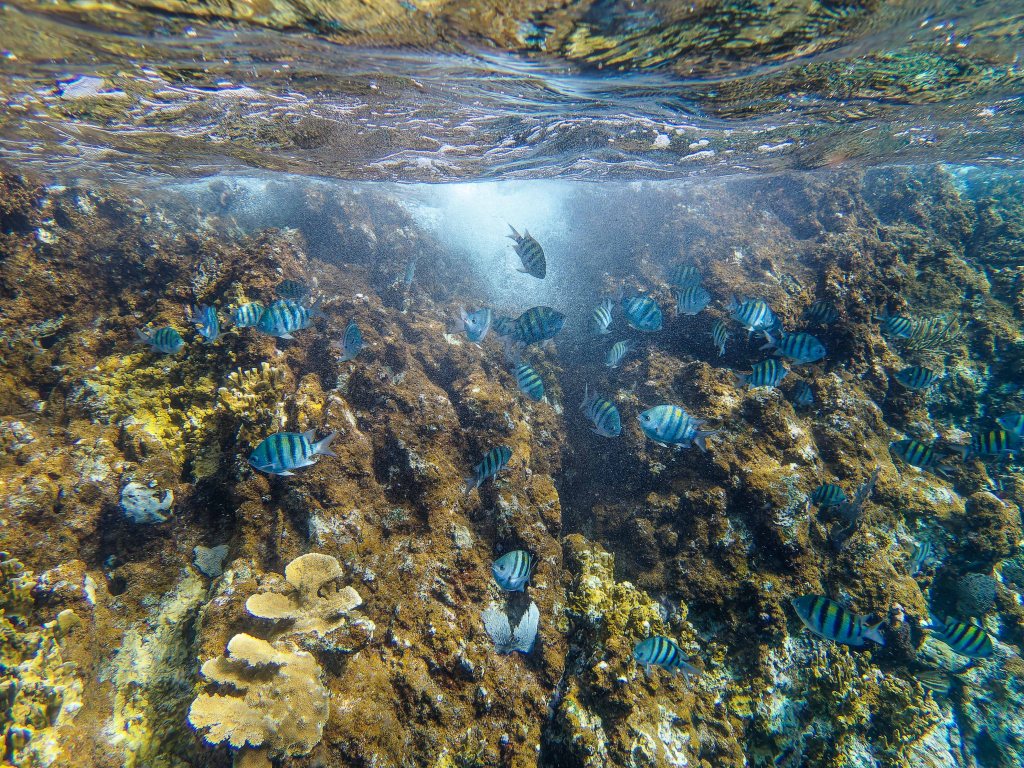
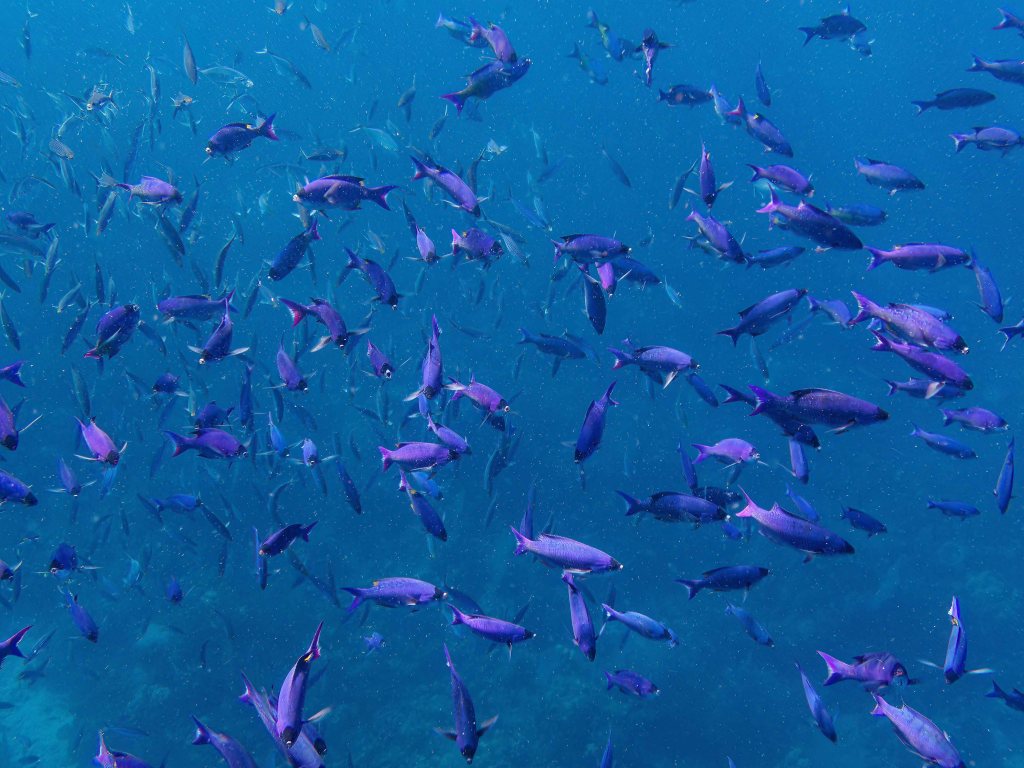
The blue critters in the picture are not the Indians. They are blue tangs that inhabit the Indians, a rock formation just west of Pelican Island, BVI, that is supposed to resemble a headdress. I don’t know if Columbus ever anchored here, but if he didn’t, he missed out. This highly sought-after snorkel and dive spot has several mooring buoys often taken by mid-morning; this adds an element of competition to your snorkeling and diving experience. Competition for a mooring ball, that is. The preferred strategy, at least the one we use, is to spend the night in the Bight, a harbor in Norman Island, and make the short trip to the Indians in the morning before the crowds.

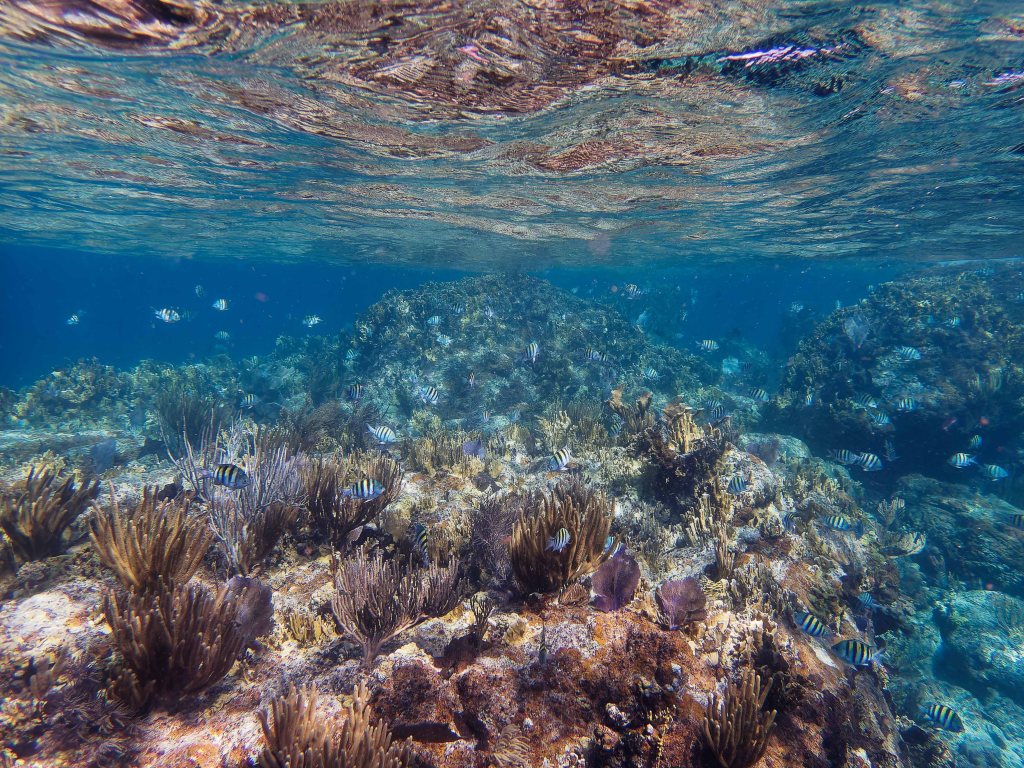
This sight’s natural attraction is underwater. It consistently ranks as the second-best dive and snorkel location in the BVI after the wreck of the Rhone. The fish are abundant, and the corals are healthy. Pictures convey the beauty of these locations better than words.

These Sargent Majors enjoyed playing in the waves.

If anyone knows the name of the blue fish below, please let me know in the comments.

The shallow side to the East

And SeaSea with her miniature new friends.

The Indians are truly a Virgin Island must see. Snorkelers relish the shallows to the East and divers the wall to the West. There is supposedly a 90 minute limit on the white day buoys and that is sufficient. My only regret is that we took too long to include this site on our itinerary. Don’t make that mistake.

Back in the Seventies you could not turn on the radio without hearing this song … but they didn’t have You Tube or music videos back then.

Sunchaser Scuba

My first breath was just…it just seemed impossible that you could actually breathe underwater. I knew in my mind it was possible, but actually experiencing it was such a gulp of joy and I feel it every time I go under the ocean. I love doing it, to be able to feel weightless, to spin on one finger, to do somersaults, to be like a graceful ballerina – even with a huge tank on your back you can do the most extraordinary things.

Sylvia Earle

Nora arranged a scuba diving trip for us. She’s really passionate about diving, and it turns out that I played a part in sparking her interest. I’ve always been drawn to water, even as a kid when I preferred Jacques Cousteau’s specials over cartoons. I fondly remember pretending to scuba dive with my little brother in our parents’ living room, crawling from table to table and finding breathable air pockets underneath. My own scuba journey began with lessons at King Neptune dive shop in Annapolis during high school. After 35 hours of training, I obtained my certification and later pursued more advanced training with instructor John Kiser. Following my footsteps, brother Bob got certified about a year later, albeit requiring special permission due to his youth. Years later, Bob married Nora, he introduced her to diving, and she’s been the one organizing our recent diving trips.

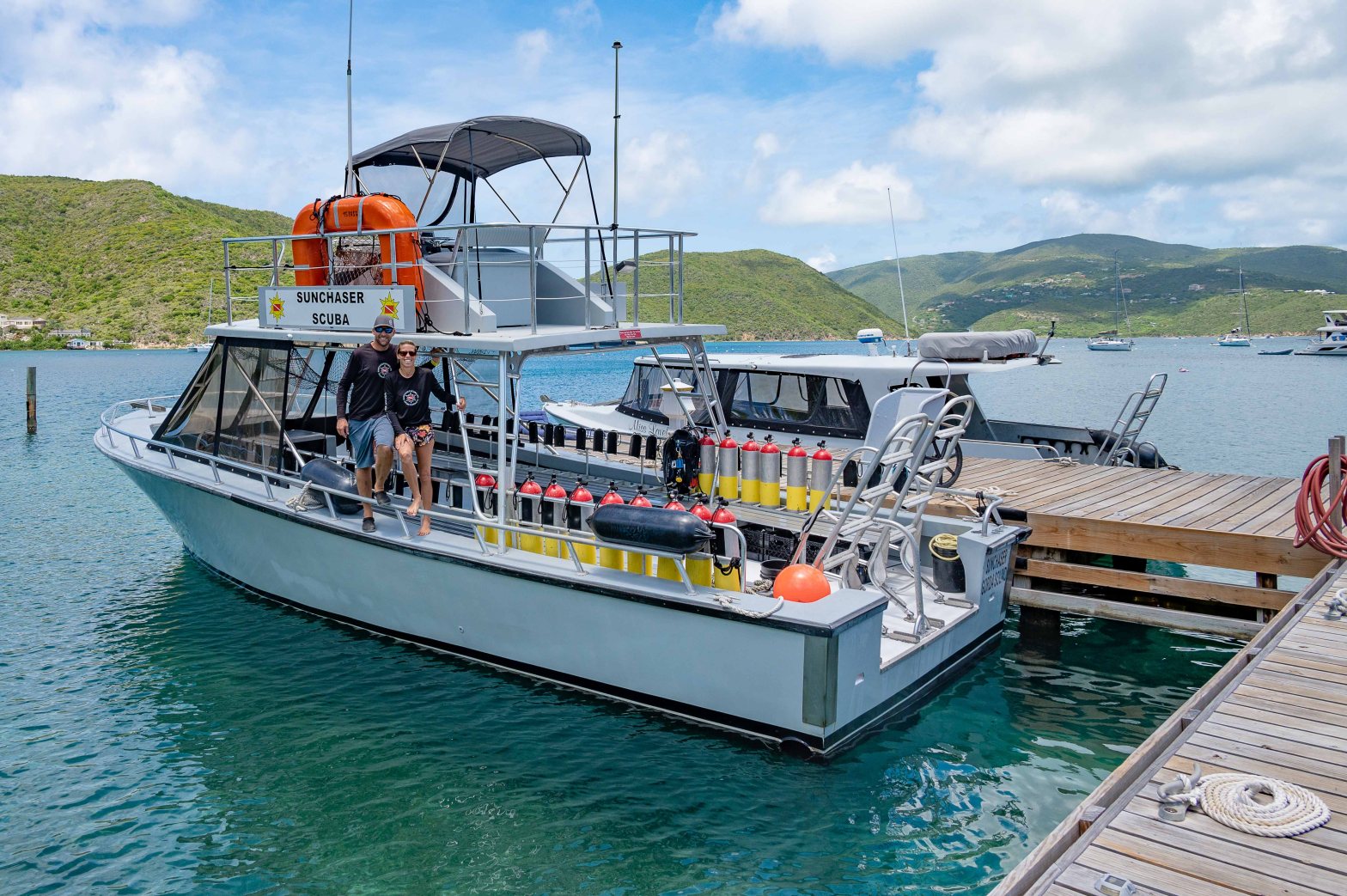
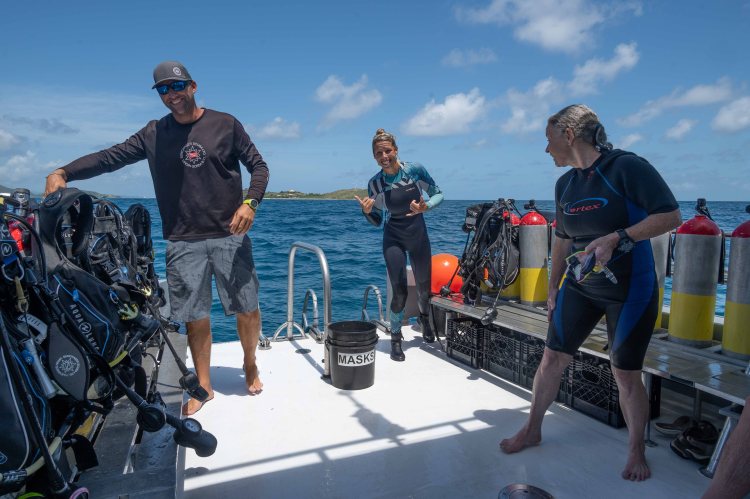
Nora is on the right . You can probably sort out which is Ben and which is Kay

Nora needed an outline of our itinerary to research our diving options. We like spending a day at both Leverick Bay and the Bitter End. Since they are so close to each other, sailing time between the two is minimal, leaving time for other exploration, like diving. Out of 4-5 operators, Nora chose Sunchaser Scuba at the Bitter End, which turned out to be a great choice. Sunchaser Scuba is owned and operated by Ben and Kay; they are incredibly friendly and knowledgeable and have been around long enough to recognize my ancient certification cards. When they aren’t taking people out to the reefs, they teach scuba, maintain moorings, and even work with a team that applies antibiotic paste to diseased coral. Ben drove the boat on our outing, and Divemaster Kay took us on the underwater tour. Dive one was to the Corridors, which is a bit of a secret, and dive two to the Invisibles, an invisible, from above, pair of coral heads that I want to avoid locating with my keel. Kay pointed out more marine life than I can mention and is not only a master diver but also a master at hand gestures to describe marine life. You definitely want her on your team when playing charades. The boat was comfortable, the dive sites were great, and we all had a fantastic time.

on the way to the dive site
back at the dock

Back at the dock, we had a little surprise. A ferry carrying cement mixers for the construction next door was blocking our inflatable boat almost completely. An occurrence that I’m told is unique in the history of the dive shop. Luckily, a dinghy with a raised outboard motor can just about float in the shallow water and be manually maneuvered under the ferry ramp. Just remember to bring the outboard’s key, or you’ll end up rowing when you get to the other side. Trust me, I know this to be true.

our little surprise

Highly recommended. 5 stars. We will definitely be visiting them again .
https://sunchaserscuba.com/

And of course we would all like to be under the sea…

Copper Mine

Some minds improve by travel, others, rather, resemble copper wire, or brass, which get the narrower by going farther.

Thomas Hood

This abandoned copper mine, a historical gem nestled in the southwest corner of Virgin Gorda, has a rich history dating back to 1837. It was a bustling hub of activity, employing around 200 miners who managed to reach a depth of 240 feet. However, the mine closed its doors in 1862, leaving behind a fascinating relic. Today, it stands as a testament to the island’s past and is a part of the national park. Copper mine ruins are a rare sight in the islands, unlike the more common remnants of the sprawling sugar plantations. Due to the lack of anchorage, it’s best to take a cab to reach this intriguing site.

We began our island tour at Leverick Bay, stopped at numerous scenic overlooks, viewed the Virgin Gorda Airport, and passed Morgan Freeman’s house on the way to the mine.

The next stop for most of those who take the tour is the Baths, but we were there the day before, and I recommend visiting that site directly by boat.

Instead, we returned up the mountain to have lunch at Hog Heaven. I had the pulled pork, but I will get the ribs next time.

With a full belly, it’s back down the mountain with a spectacular view of the bay and, oddly enough, a chance to restore one’s virginity.

Upon departing the taxi, don’t forget to take care of Cyril, he’s an excellent guide.

And finally from Mr. Freeman whom Cyril says is a down to earth good guy.

Spiny

If a lobster didn’t look like a sci-fi monster, people would be less able to drop him alive into boiling water.

George carlin

It’s time for another creature post. This one took me a while, as I find these bugs hard to photograph. They hang out in their dark lobster holes during daylight and only venture out at night to eat crabs, snails, and stuff, or to migrate in large groups single file when the mood suits them. I do night photography above the waves, and have not encountered a migration so we do not commonly cross paths. I’d be a lousy lobster fisherman. Their fancy name is Panulirus argus, and they have many relatives worldwide who live in warm seas. Their cold water relatives with claws are not that closely related. It’s odd because most recipes use them interchangeably. Imagine being judged based on what you taste like. But I’ll do just that. The langoustes of the Mediterranean are known for their saltiness, the Caribbean for their sweetness, and the Californian a combination of the two. A warning: I generally enjoy lobster, but at Mary Poppins Restaurant last night, they had super cauliflower cheese, but the lobster was atrocious.

You knew this was coming …

Brandywine Bay

Wine is constant proof that God loves us and loves to see us happy.

Benjamin Franklin

Brandywine Bay provided us with a solution. The problem was that one of our crew had to leave us early, catch the morning ferry in Road Town, and rejoin the real world via the airport on St Thomas. Roadtown is a busy, crowded place with no moorings and limited anchorage. We were not up for a night in a marina, so we looked for a nearby anchorage, and Brandywine Bay was it. The original plan was to motor the short distance to Road Town and dinghy the sad departing crew member to the ferry dock. But alas, the ferry dock does not have a convenient dinghy dock. But Brandywine Bay does; from there, it’s a short taxi ride to Road Town.

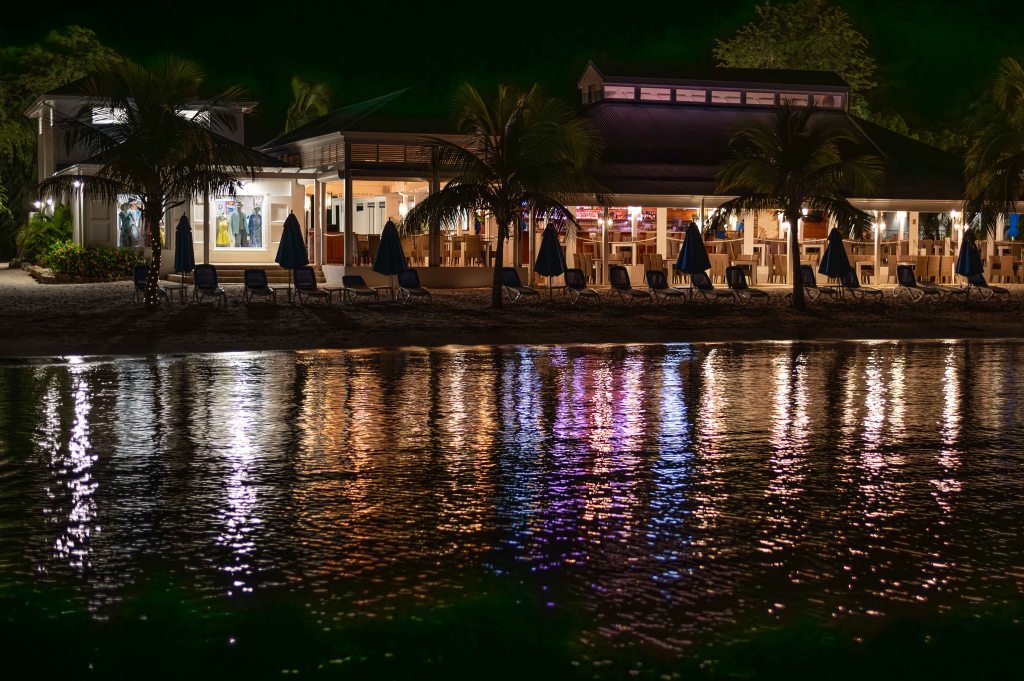
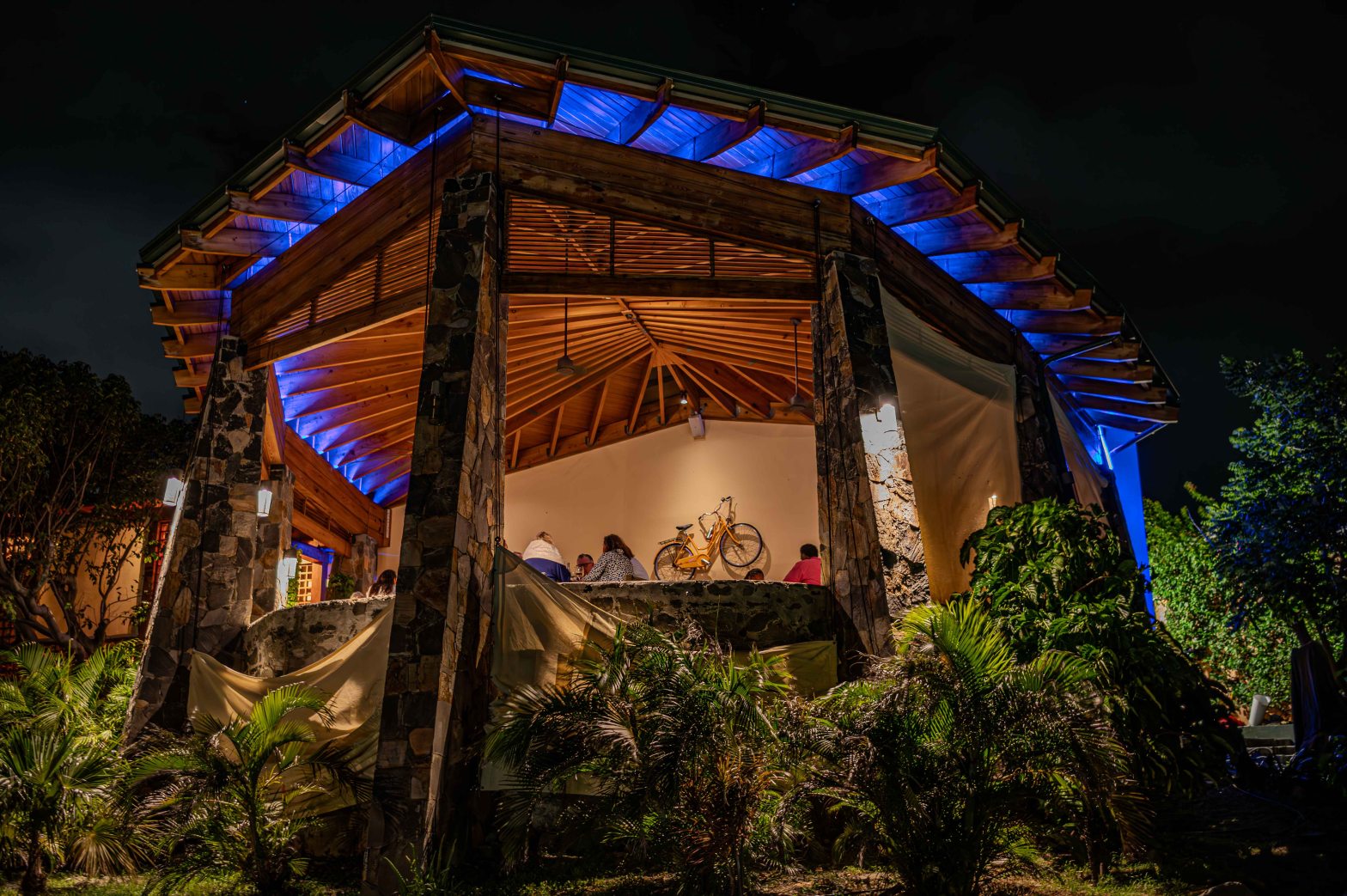
The real perk to this solution is the Brandywine Bay Restaurant. The owners put in the moorings, which are gratis for those who dine at the restaurant. The dinghy dock is on the bay’s east side, and from there, is a fifty-yard uphill walk to the restaurant. The little hike will prepare you for a round of signature drinks before an elegant meal. I chose the paella, as it contains octopus, which I used to tease a squeamish crew member. Connecting with my inner child or just childish … you decide.

TheBrandywine dinghy dock

Which music video should I use? Can’t decide so I do both.