It isn’t the mountain ahead that wears you out; it’s the grain of sand in your shoe.
Robert W. Service
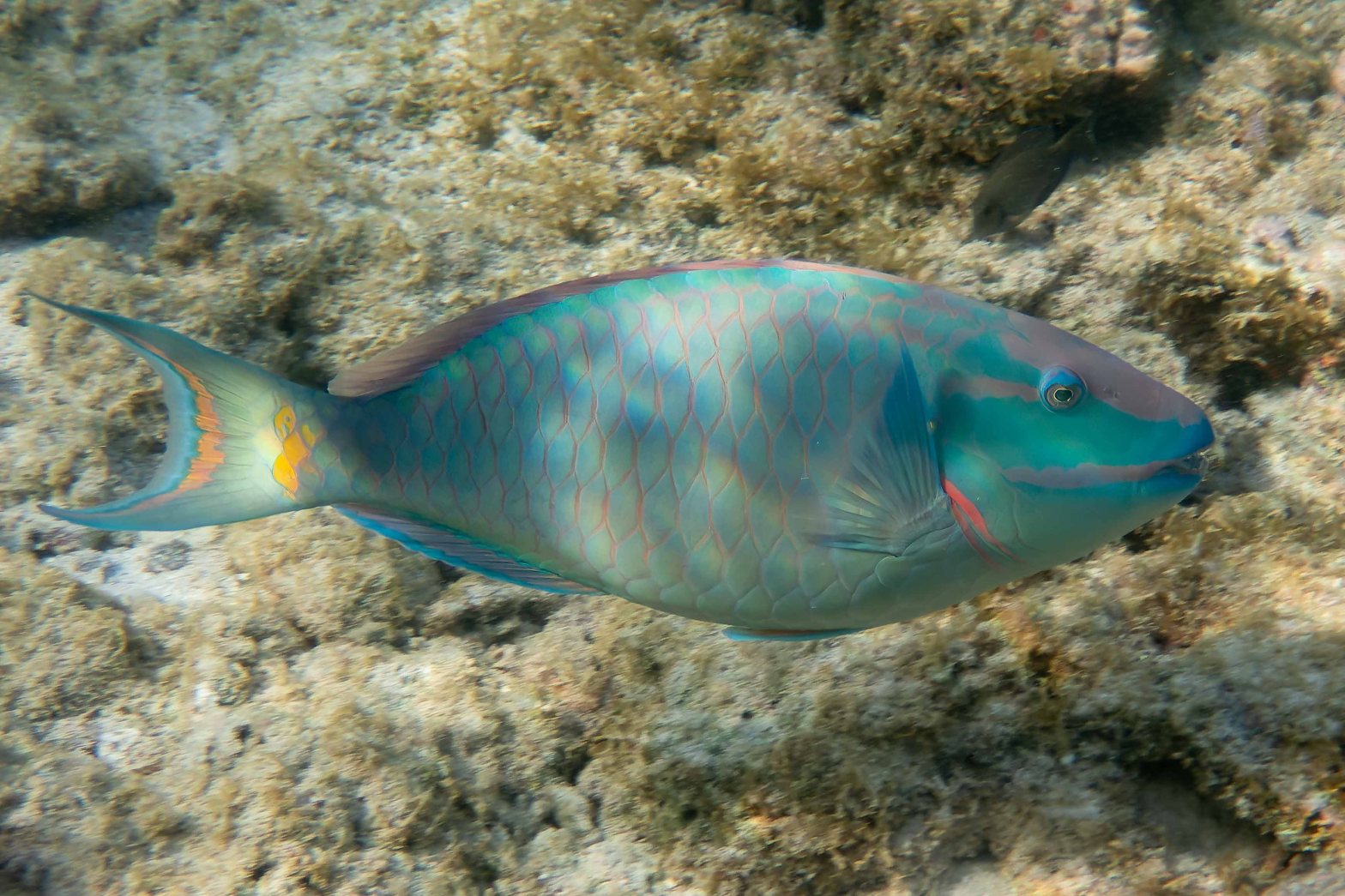
Parrot fish hang out in the coral because that is what they eat. It’s mostly the algae growing in, and on the coral they are after. Sounds destructive? It isn’t. All that noisy underwater crunching benefits the reef by keeping it clean. The fish remove unhealthy or dead coral, and the algae that compete with and smother the coral polyps.
So what kind of teeth do you need to crunch on coral? You need a thousand of them arranged in 15 rows and fused together to form a beak. When they finally wear out, they fall out, and the next row of teeth takes over. Some scientists in Wisconsin determined that parrot fish teeth are harder than copper and can withstand 530 tons of pressure per square inch.
These guys inhabit all the warm seas with coral reefs and can range from 1 to 4 feet long. Depending on the size, these fish can excrete anywhere from 90 to 900 kg of ground-up coral sand annually. Keep that in mind next time you’re sipping a cold margarita on a picturesque white sandy beach. That’s fish poop you are wiggling your toes in. Once you get used to that idea and are working on the second drink, try to wrap your head around the idea that these creatures can change color and gender. No kidding.
So now that you know all about Parrot fish, what about Parrot heads? Well, I’ll let you hear it from the man himself.
 Sailing Sea Sea